Bitcoin Insights & Updates

Build Bitcoin Trust with Government Free Online Courses with Certificates

Introduction: Building a Foundation of Trust in a Complex Digital World
Trying to understand Bitcoin today can feel impossible. The information is everywhere, loud, and full of confusing terms.

One website says buy, another screams about a crash. You know you need to learn, but you want to start with facts, not hype. You need a foundation you can trust.
This search for solid ground is why so many people look for government free online courses with certificates. It’s about more than just saving money. It’s a search for structure, credibility, and a clear path forward from an official source. As one 2026 report on adult learning trends confirms, adults are increasingly seeking out flexible yet authoritative pathways for education. They want the weight of a recognized name backing their knowledge.
The good news is that this desire for trustworthy, structured learning is booming online. Experts note that access to high-quality, on-demand classes is a top priority for modern learners. From free Google certification courses to university-led programs, the landscape of CE courses online is rich with opportunity for those who know where to look.
This article is your guide to that landscape. We connect the timeless value of certified, reputable education with your modern goal of financial literacy. We believe that the disciplined approach you might use to find a reputable CPR certification online is the same mindset you should apply to understanding Bitcoin. It’s about safety, clarity, and verified knowledge.
Here, we cut through the noise. We marry the concept of official, skill-building credentials with practical steps for understanding digital assets. Think of this as building your personal framework for trust, starting with education.
To get clear, step-by-step guidance delivered to you, consider subscribing to the free Clicks and Trades newsletter. It’s a great way to continue learning about crypto in a simple, safe way.
Ready to build your foundation? Let’s begin.
Why Government & Accredited Online Courses are the Ultimate Trust Anchor
When you start learning about Bitcoin, it feels like stepping into a loud, crowded room. Everyone is shouting different advice. Some promise quick riches. Others warn of disaster. Who do you listen to?
This is where a trust anchor saves you. A trust anchor is something solid and reliable you can hold onto in a sea of confusion. For many people, that anchor is a course from a government body or an accredited institution. Here’s why.
First, these courses carry inherent authority. They are built for public good and education, not for profit or hype. When you take a course from a renowned university or a public sector program, you are learning from a curriculum designed by experts who follow strict academic standards. As a 2026 review of the best free online courses notes, the value is in learning "MIT courses taught by MIT professors" or "Google career certificates designed by Google employees." The name behind the education matters.
Second, the certificate you earn has recognizable weight. Whether it’s for CPR certification online or a public health module, that document often links to a public or academic standard. It’s a signal to others (and to yourself) that you completed vetted, quality training. This is different from a random certificate from an unknown website. In the world of CE courses online, this credibility is everything. It translates directly to Bitcoin education: you want knowledge that has been checked for accuracy, not just shared for clicks.
Finally, and most importantly, these programs provide a structured, filtered path. They remove the noise and speculation. A good government free online courses with certificates program doesn’t jump to the most exciting or risky topics first. It builds a foundation. It teaches the "why" and the "how" before the "what if."
This structured approach is exactly what a Bitcoin beginner needs. You wouldn’t learn to drive by only studying high-speed chases. You’d start with the rules of the road, just like in a defensive driving course. The same principle applies here. A trustworthy course gives you the fundamentals of blockchain, security, and terminology in a logical order. This builds real understanding, not just fragmented facts.
The trend is clear. Learners in 2026 overwhelmingly value flexible, on-demand access to authoritative content. They seek out platforms that offer clarity and credibility. This mindset is your biggest asset. By choosing to learn from accredited sources, whether it’s free Google certification courses or university-led economics modules, you are building your own framework for trust.
You’re taking control of your education, starting with the most reliable sources available.
For ongoing guidance that follows this same principle of clear, safe, and structured learning, I recommend subscribing to the free Clicks and Trades newsletter. It breaks down crypto topics into simple, actionable steps.
Ready to take that first solid step? Sign Up for free and continue building your knowledge with confidence.
E-E-A-T in Action: How These Courses Demonstrate Expertise and Authoritativeness
So you know a trust anchor is important. But how do you actually spot one in the wild? In 2026, we can look to a clear framework used by top search engines and savvy learners alike: E-E-A-T. This stands for Experience, Expertise, Authoritativeness, and Trustworthiness.
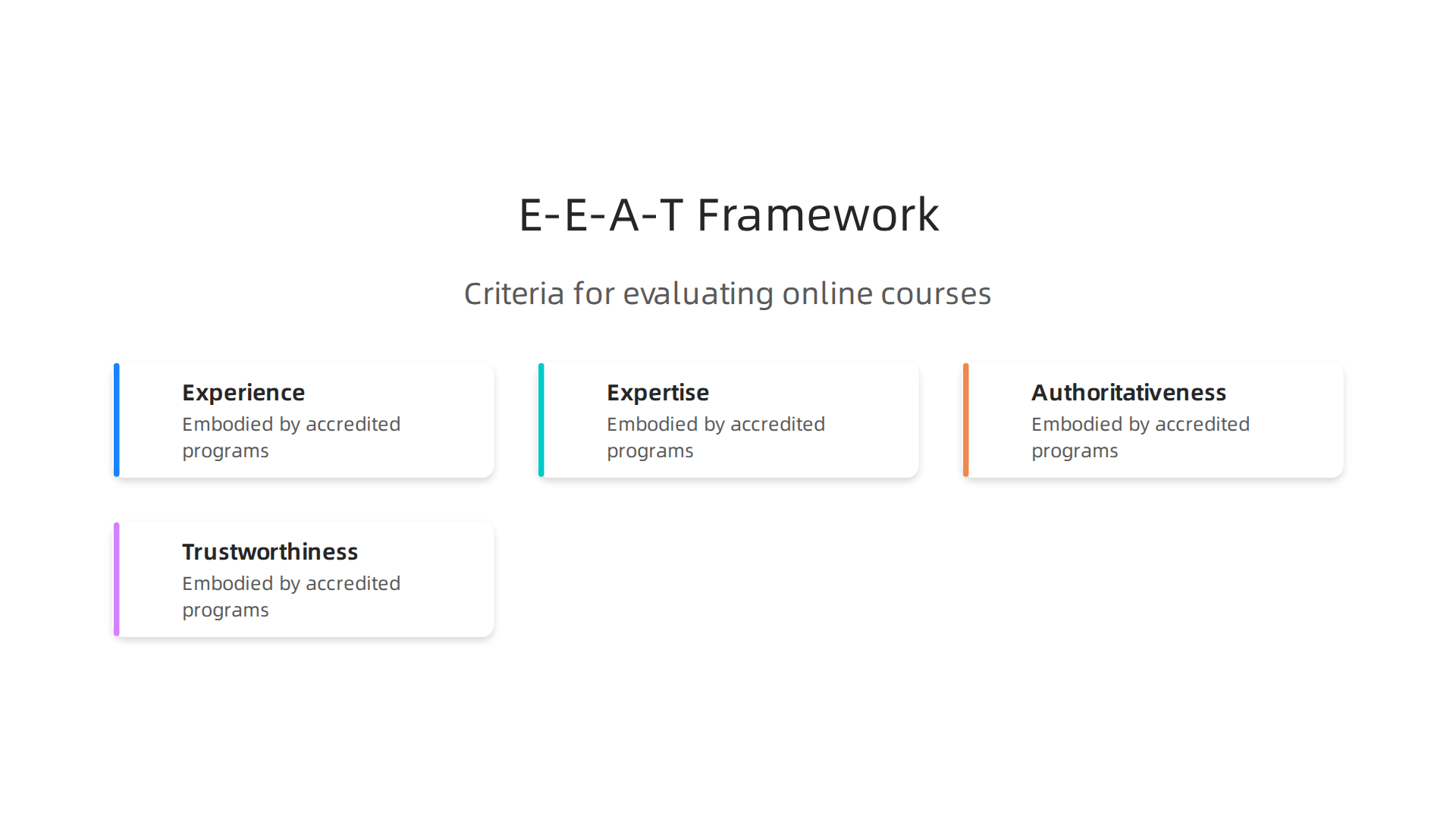
Let’s break down how government free online courses with certificates excel in these areas.
First, the Expertise is baked in. These courses aren’t made by random influencers. They are created or rigorously vetted by subject-matter experts with verifiable credentials. Think of a CPR certification online program from the Red Cross or American Heart Association. The instructors are medical professionals. The same principle applies to a blockchain economics module from a public university or free Google certification courses designed by Google’s own engineers and product teams. You are learning from the source, not a second-hand summary. As a 2026 review highlights, the value is in learning "MIT courses taught by MIT professors" or "Google career certificates designed by Google employees".
Second, the Authoritativeness is automatic. The publishing entity itself carries immense weight. A .gov or .edu domain is a recognized authority. When you complete a course from one of these institutions, the certificate you earn links directly back to that reputable standard. This is a cornerstone of credible CE courses online for professionals. Your learning is backed by an institution built for public education and rigorous standards, not for generating hype or ad revenue. This trend is growing, as adult learners in 2026 increasingly seek out flexible, on-demand access to authoritative content they can trust.
Finally, Trustworthiness is proven through assessment. This is the critical difference between passive watching and active learning. A quality course doesn’t just give you information. It tests you on it. Passing a final quiz or project to earn your certificate proves a real transfer of knowledge. You didn’t just consume content. You demonstrated understanding. This structured, accountable path is exactly what builds the confidence to then explore more complex topics, whether it’s Bitcoin mechanics or forex session times.
In short, these courses turn abstract principles into a tangible, trustworthy learning journey. They provide the filtered, expert-vetted path that cuts through the noise. It’s the same reason you’d use a trusted resource like Google Scholar for finding reliable Bitcoin facts.
For ongoing guidance that follows this same E-E-A-T principle, delivering clear, safe, and structured crypto education directly to your inbox, I recommend the free Clicks and Trades newsletter.
Ready to apply this framework to your learning? Sign Up for free and continue building your knowledge with confidence.
Navigating the Landscape: Key Platforms Offering Free Certified Courses in 2026
Now that you understand the importance of E-E-A-T, the next logical question is: where do you actually find these high-quality government free online courses with certificates? The landscape in 2026 is rich with options, but knowing where to look is half the battle. Let’s explore the major platforms and learn how to spot the real deals.
Major Global and National Platforms
Thankfully, you don’t have to search every government website individually. Many trusted educational platforms partner directly with public institutions to host their content. Here are the key hubs for 2026:
- Coursera and edX: These giants host hundreds of courses from top public universities and even government agencies worldwide. You can find free Google certification courses, modules from places like the University of Michigan, and subjects like public policy. On Coursera, you can audit most courses for free, which gives you full access to lectures and readings.
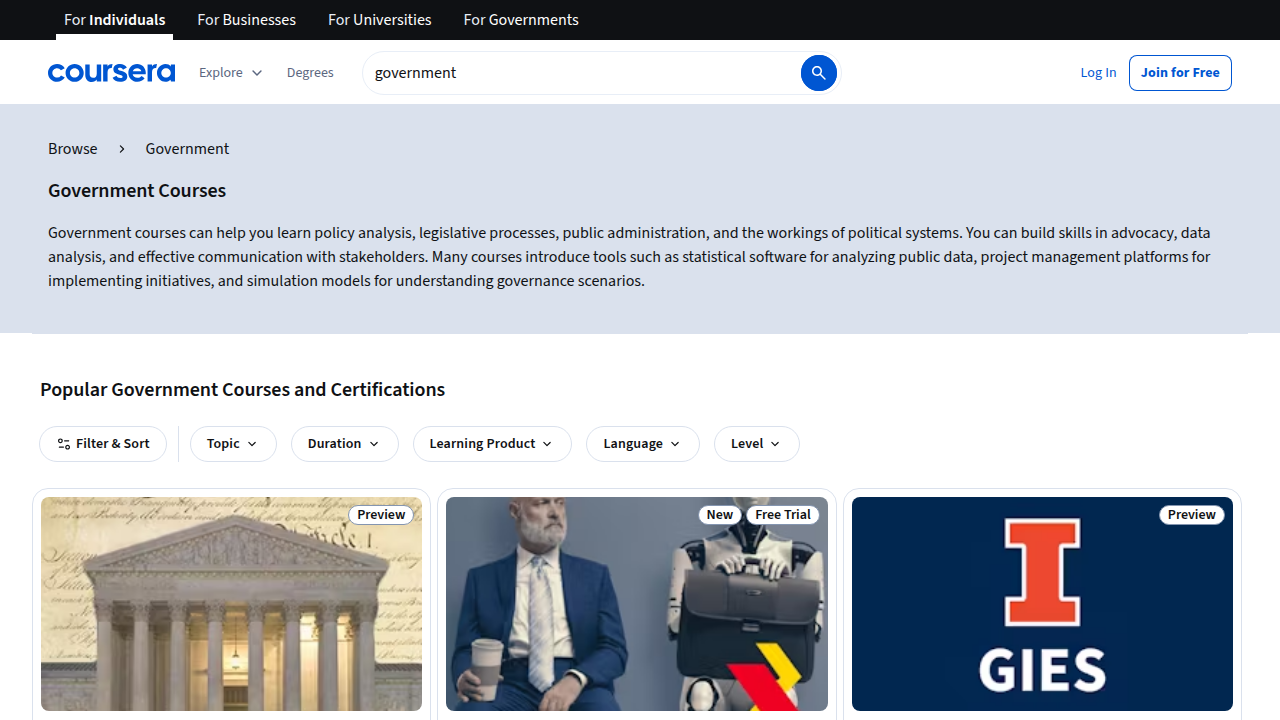
Similarly, a wide range of CE courses online for professionals are available. You can explore a curated list of Best Government Courses & Certificates for 2026 on Coursera to start.
- University Direct Portals: Many public universities offer their own free courses. Harvard University has a dedicated catalog of free courses on topics from computer science to theology. The University of Michigan also has programs where affiliated members can earn verified certificates for free, as noted in their 2026 "Learn for Good" initiative. Aggregators like Open Culture list over 1,700 free online courses from top universities, making discovery easy.
- International Organizations: Agencies like the United Nations and the World Health Organization (WHO) provide free certified training on global issues. For example, there are ongoing opportunities for WHO Free Online Courses in 2026 with Free Certificates on public health topics.
- Federal and State Portals: Direct government initiatives, often found on
.govwebsites, offer certifications in high-demand fields like cybersecurity, healthcare (think CPR certification online from official bodies), and project management. Career sites frequently compile lists of these valuable resources.
Free vs. Paid: Understanding the Certificate Model
This is a crucial distinction. Most of these platforms operate on a "freemium" model:
- Fully Free (Audit Mode): You can enroll in the course, access all video lectures, readings, and sometimes even participate in discussion forums at no cost. This is perfect for pure learning.
- Free Course, Paid Certificate: This is the most common structure. The knowledge is free, but if you want the official, sharable certificate that proves completion, there is usually a fee. However, financial aid is widely available.
- Fully Free Certificate: Some programs, often for alumni, current students, or through specific grants, offer the certificate at no cost. For instance, the University of Michigan offers a path for its community to earn a verified certificate in 200+ online courses for free. Always check the fine print on the course homepage.
How to Verify and Avoid Imposters
With so much value, unfortunately, there can be scams or misleading sites. Follow these steps to ensure you’re on a legitimate path:
- Check the Domain and Partners: The course should be hosted on or clearly partnered with a recognized
.edu,.gov, or.orgdomain (like WHO, Red Cross, or a public university). Be wary of sites that copy course names but have a generic.comaddress. - Look for Official Logos: Legitimate course pages will display the logos of the issuing university or agency prominently.
- Verify on the Source’s Main Site: If you find a course on an aggregator site, take an extra minute to search for that course name on the main website of the university or organization. This confirms its existence and official status.
- Read Reviews and Guides: Consult updated, trustworthy round-ups from career advice sites. For example, guides like 15 Free Online Government Certifications To Boost Your Career can help you identify reputable programs.
This process of verification is similar to the diligence you’d apply in other specialized fields, like ensuring you’re using a legitimate guide to defensive driving courses online or understanding authentic forex trading session times.
Navigating this world confidently means you can build verifiable skills on your own terms. For a consistent, safe, and clear guide to building knowledge in complex areas like Bitcoin, where trusted information is just as critical, I rely on the free Clicks and Trades newsletter. It cuts through the noise with the same principled approach.
Ready to start your next certified learning journey? Sign Up for free and get trusted guidance delivered straight to you.
Strategic Course Selection: Building a Bitcoin-Ready Knowledge Base
Now you know where to find government free online courses with certificates. The next step is choosing the right ones. For a topic as layered as Bitcoin, random learning won’t cut it. A strong understanding rests on four core pillars. Think of them as the foundation of a house. If one is weak, the whole structure is shaky.
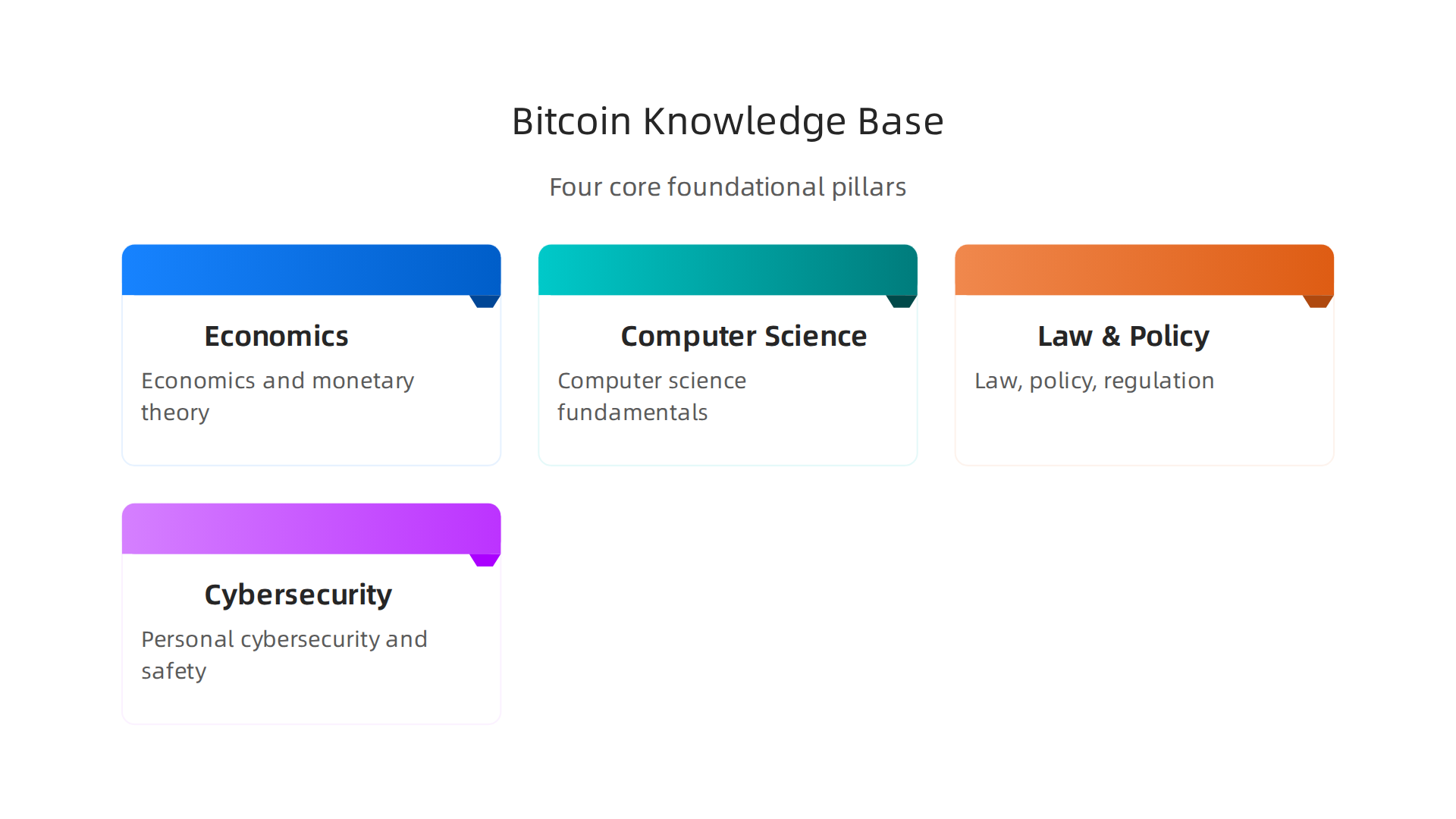
Here’s how to map available free certified courses to build that solid, Bitcoin-ready foundation in 2026.
The Four Pillars of Bitcoin Understanding
- Economics & Monetary Theory: Bitcoin is, first and foremost, a new form of money. You need to understand basics like inflation, monetary policy, and what gives something value. This pillar helps you answer why Bitcoin exists.
- Computer Science Basics: You don’t need to be a coder, but grasping concepts like cryptography, decentralized networks, and basic cybersecurity is crucial. This explains how Bitcoin works securely. As research from institutions like MIT’s Cryptoeconomics Lab shows, this field brings together economics and computer science to study decentralized systems.
- Law, Policy, & Regulation: Bitcoin operates in a global landscape of rules. Knowledge of financial regulations, digital asset policy, and taxation helps you navigate the space legally and safely.
- Personal Cybersecurity & Operational Safety: This is your CPR certification online for the digital age. It’s the practical knowledge to protect your assets, covering secure storage, threat awareness, and best practices.
Mapping Free Courses to Each Pillar
The beauty of government free online courses with certificates is that they offer authoritative training in each of these areas. You just need to know what to look for.
| Pillar | What to Search For | Where to Find It (Examples) |
|---|---|---|
| Economics | "Introductory Economics," "Monetary Policy," "Financial Markets" | Platforms like Coursera host courses from major public universities. You can find a great starting point in their Best Government Courses & Certificates for 2026 list. |
| Computer Science | "Cybersecurity Fundamentals," "Introduction to Cryptography," "Network Security" | Stanford University offers detailed material on cryptography and security. Furthermore, many institutions provide free Google certification courses on IT support and security basics, which are perfect primers. |
| Law & Policy | "Regulation of Digital Money," "Fintech Law," "Public Policy Analysis" | Look for courses from law schools or public policy institutes on platforms like edX. Reports on topics like Bitcoin mining economics also tie deeply into policy discussions. |
| Personal Cybersecurity | "Cybersecurity for Everyone," "Data Privacy," "Secure Digital Habits" | These are often available as CE courses online for professionals. Direct government cyber agencies sometimes offer public awareness training with certificates. |
Building Your Personalized Learning Path
With the pillars and course types in mind, you can build a sequential plan. Start broad, then get specific.
- Phase 1: Foundation (Months 1-2). Start with a free introductory economics course from a public university. Concurrently, take a short cybersecurity awareness course. This builds your "why" and "how to stay safe" knowledge at the same time.
- Phase 2: Core Mechanics (Months 3-4). Dive into a computer science fundamentals course that covers basics like networks and encryption. Follow this with a course on the policy landscape of technology or finance.
- Phase 3: Synthesis & Specialization (Month 5+). Now you’re ready for dedicated "Bitcoin and Blockchain" courses. With your strong foundation, you’ll understand the deeper lectures, not just the headlines. You can explore Bitcoin courses on Coursera or other platforms with much greater clarity.
The goal is progressive understanding. It’s the same methodical approach you’d use for any complex skill, similar to following a trusted guide to defensive driving courses online to master safe driving rules step-by-step.
This structured learning journey turns overwhelming complexity into manageable steps. For consistent, clear guidance that helps connect these dots specifically for Bitcoin, I rely on the free Clicks and Trades newsletter. It delivers step-by-step education and safety tips directly to you, helping to solidify the knowledge you gain from these formal courses.
Ready to build your Bitcoin knowledge with confidence? Sign Up for free and get a clear, trusted learning companion for your journey.
Beyond the Certificate: Applying Course Knowledge to Practical Bitcoin Literacy
You’ve completed some excellent government free online courses with certificates. You understand the theories. Now what?
The real test begins when you step out of the classroom and into the real world of Bitcoin. A certificate proves you studied. Practical literacy proves you can use that knowledge. Here’s how to bridge that gap and turn your course credits into real-world confidence.
1. Connect Macroeconomics to Bitcoin’s Digital Gold Story
Your economics course taught you about inflation, central banks, and monetary supply. Now, listen to any Bitcoin discussion in 2026. You’ll hear those same terms.
When you learn about a central bank increasing the money supply, don’t just think "inflation." Think "Bitcoin’s fixed supply of 21 million." That scarcity is its core economic feature. When analysts talk about Bitcoin as "digital gold," your economics training lets you evaluate that claim critically. You can understand the concept of a hard, verifiably scarce asset in a world of printable money.
This intersection of economics and technology is exactly what researchers at places like the MIT Cryptoeconomics Lab study. It’s where theory meets digital reality. Use your course knowledge to analyze reports, like those on Bitcoin mining economics, not as a spectator, but with an informed perspective on incentives and costs.
2. Use Cybersecurity Smarts to Protect Your Bitcoin
This is where your CE courses online about digital safety become your most important tool.

A cryptography and computer security course teaches you that security is a process, not a product. This PDF from Stanford on cryptography makes a key point: cryptography is essential, but it can’t guarantee safety on its own.
Apply this directly to your Bitcoin.
- Wallet Choice: You’ll now understand why a simple exchange login (a "hot wallet") is riskier than a hardware wallet (a "cold wallet"). You’re applying the "cybersecurity fundamentals" you learned.
- Password & Key Management: That module on secure habits? It’s why you’ll use a password manager and never store your seed phrase online. It’s the digital equivalent of the safety skills from a CPR certification online.
- Threat Evaluation: You can spot phishing attempts and dubious "investment schemes" because you know the red flags of social engineering attacks.
This practical safety knowledge is non-negotiable. For ongoing, clear guidance on these safe practices, I find the free Clicks and Trades newsletter incredibly helpful. It translates complex security concepts into simple, actionable steps.
3. Decode News and Regulations with a Policy Lens
After a public policy or law course, you have a framework. Use it to read the news differently.
When a government announces new digital asset regulations, you won’t just see "new rules." You’ll see the interplay between innovation, consumer protection, and financial stability that your course outlined. You can ask better questions: Is this regulation targeting exchanges (platforms) or individual users? Is it about taxation, anti-money laundering, or investor safety?
This helps you move from fear or confusion to informed awareness. You learn to navigate the space legally, just as you would use a guide to defensive driving courses online to understand road rules, not just memorize them. For researching official policies and reports, a tool like our guide to using Google Scholar for Bitcoin facts can be invaluable.
Your Knowledge is Your Compass
The goal of these government free online courses with certificates isn’t just to pass a test. It’s to build a mental toolkit. Economics helps you understand why Bitcoin has value. Computer science helps you understand how it’s secure. Law and policy help you understand the rules of the road.
When you watch a detailed Bitcoin explainer, you’ll follow the concepts, not just the headlines. When you look at a list of Bitcoin courses on Coursera, you’ll know which advanced topics you’re ready for.
This is practical literacy. It turns information into understanding and theory into action.
Ready to continue building that confident understanding with clear, step-by-step guidance? Sign Up for free and get trusted insights delivered straight to you.
Maximizing Your Learning: Complementary Free Resources and Communities
Finishing a formal course can leave you with a great certificate and a quiet question. "Now what?" This is where the real learning community begins. Your government free online courses with certificates provide the official foundation. But the walls of that foundation are built with daily practice, discussion, and exploration. You don’t need another formal class. You need the right places to apply, question, and grow your knowledge.
Think of it like getting your CPR certification online. The course teaches you the steps, but joining a local volunteer group lets you stay sharp and learn from others’ experiences. For Bitcoin, that means finding the best blogs, podcasts, and groups.
1. Curate Your Reading and Listening List
Beyond textbooks and course modules, the Bitcoin space is rich with free, high-quality content. These resources keep you updated and dive deeper into niche topics.
- Official Documentation & Blogs: Start with the source. The Bitcoin.org community page is a trusted hub that lists forums, groups, and essential resources. For technical deep dives, developer blogs and protocol documentation are invaluable.
- Reputable News & Analysis: Follow a few trusted writers and podcasters who focus on education over hype. Look for those who explain the "why" behind the news, helping you apply your economics and policy knowledge.
- Educational Newsletters: For consistent, digestible lessons that build on your formal courses, a free newsletter can be perfect. I rely on the Clicks and Trades newsletter for clear, step-by-step guides that turn complex ideas into simple actions.
2. Find Your People in Trustworthy Communities
A supportive community is your best defense against confusion and scams. The right group answers questions, shares genuine insights, and warns about common pitfalls. According to a 2026 guide on the best crypto communities, good communities are defined by helpful moderation and a focus on learning.
Here’s how to spot a good one:
- Look for Organized Channels: A quality Discord or forum will have separate channels for beginners, technical help, and news. This keeps conversations focused and manageable, much like a structured CE courses online environment.
- Observe the Moderators: Active, knowledgeable moderators who enforce rules against spam and harassment are a green flag. They cultivate a safe space for learning.
- Beware of "Guaranteed Profit" Talk: Any community centered on pumping specific coins or promising riches is a major red flag. As noted in a guide on joining crypto communities without risks, reputable groups encourage education, not reckless speculation.
- Start with the Classics: Long-standing forums like the Bitcointalk Forum and the r/Bitcoin subreddit are massive repositories of discussion and historical knowledge. You can learn a lot just by reading through old threads.
3. Cement Knowledge with Safe, Hands-On Practice
Reading and talking are essential, but nothing builds confidence like doing. This is where you can practice without risking real money.
- Use a Bitcoin Testnet: A testnet is a parallel version of Bitcoin where the coins have no real value. It’s a global sandbox. You can practice sending and receiving test coins, experiment with different wallet types, and see how transactions work on the blockchain—all with zero financial risk.
- Simulate Security Practices: Set up a software wallet on an old device, create a secure seed phrase, and practice backing it up safely. This hands-on repetition turns the theory from your cybersecurity and computer security course into muscle memory.
- Follow a Project Guide: Find a tutorial on building a simple project, like tracking testnet transactions. This practical application helps you understand the technology’s moving parts, preparing you for more advanced free google certification courses in blockchain development if you choose to go that route.
The journey from a certificate to true literacy is a continuous path. It blends the structure of your government free online courses with certificates with the dynamic, real-world learning found in communities and practice. By curating your resources, choosing your communities wisely, and getting your hands digitally dirty in safe spaces, you build the durable understanding that lasts.
Ready to have this kind of clear, practical guidance delivered to you? Sign Up for free to get trusted insights and step-by-step help that complements your formal education.
Common Pitfalls and How to Avoid Them: A Learner’s Safety Checklist
You have the resources and the community. You’re ready to build. But even with the best government free online courses with certificates, it’s easy to stumble on the path to real understanding. Knowing these common traps helps you learn smarter and safer.
Here is your safety checklist.
1. Stop Collecting Certificates, Start Building Understanding
It’s tempting to race through courses, stacking up PDF certificates. This is called "credential hoarding," and it leaves you with a pile of paper but shaky knowledge. A 2026 analysis on the value of online learning confirms that the real worth is in the skill, not just the certificate.
Think about a CPR certification online. You wouldn’t feel confident performing CPR just because you have the card. You need the practice and the muscle memory. The same is true for Bitcoin.
How to avoid it:
- Apply before you advance. After finishing a module, explain the concept to a friend or write a short summary. Can’t do it? Review the material.
- Follow one path deeply. Instead of jumping from a broad Bitcoin course to a random free google certification courses on AI, go deeper. Use your foundation to explore a specific niche, like how Bitcoin wallets work. Our guide on why Google Scholar is your quiet room for Bitcoin facts can help you focus your research.
- Value the skill. Employers in 2026 value micro-credentials that show you can do something. Focus on being able to explain the technology or execute a safe transaction, not just on collecting another completion badge.
2. Steer Clear of Hype and "Get Rich Quick" Advice
A major red flag in any educational space is a shift from "how it works" to "how to get rich." Foundational education teaches principles. Speculative advice sells dreams, often to benefit the advisor. As noted in a guide on joining crypto communities without risks, groups focused on "guaranteed profits" are dangerous.
How to avoid it:
- Check the course focus. A solid CE courses online for finance teaches regulations and ethics, not stock picks. A good Bitcoin course should teach technology and economics, not price predictions.
- Listen to language. Be wary of instructors or communities constantly pushing specific tokens, trading signals, or using urgent, greedy language.
- Seek balanced communities. Trustworthy groups, like those listed in resources such as the best crypto communities of 2026, focus on discussion and support, not pumping coins.
3. Manage Your Time and Energy to Avoid Burnout
Learning something complex while managing a job, family, and life is hard. Trying to binge-learn Bitcoin over a weekend leads to confusion and frustration. You might give up entirely.
How to avoid it:
- Set micro-goals. Instead of "learn Bitcoin," aim for "spend 20 minutes Tuesday understanding what a blockchain block is." Small, consistent wins build lasting knowledge. This approach is similar to the structured, manageable lessons found in a guide to defensive driving courses online.
- Schedule learning like an appointment. Block 30 minutes on your calendar two or three times a week. Protect this time.
- Use digestible resources. When time is short, turn to focused, clear summaries instead of diving into a 2-hour technical lecture. For consistent, bite-sized lessons that fit a busy schedule, the free Clicks and Trades newsletter offers step-by-step guidance without the overwhelm.
The goal of your learning journey isn’t to finish. It’s to become confidently literate. By focusing on deep understanding, ignoring the noise of hype, and protecting your time, you turn your government free online courses with certificates from a one-time event into a launchpad for lifelong competence.
Want a trusted partner to help you navigate this journey with clear, safe, and practical advice each week? Sign Up for free insights that help you build real understanding, one simple step at a time.
From Learning to Earning: Showcasing Your New Knowledge
You have done the hard work. You have completed your government free online courses with certificates and built a solid understanding. Now, how do you turn that knowledge into real world value?

Here is how to showcase your learning and put it to work.
How to Legitimately List Your New Skills
First, get your certificates out of your downloads folder and onto your professional profiles. The key is to frame them correctly.
- On Your Resume: Create a section titled "Professional Development" or "Certifications & Skills." List the course name, the issuing organization, and the completion date. Most importantly, add a bullet point explaining the practical skill you gained. For example, instead of just "Bitcoin Fundamentals Certificate," write "Completed a certified course on Bitcoin fundamentals, gaining practical knowledge in blockchain mechanics and secure digital asset storage."
- On LinkedIn: Add the certificate to the "Licenses & Certifications" section. You can also write a short post about your learning journey, focusing on the key concept you now understand. This shows proactive learning and thought leadership.
This approach works because employers in 2026 increasingly value micro credentials. As noted in recent workforce analyses, these short, focused certifications prove you have specific, job ready skills. Listing them effectively signals that you are adaptable and committed to continuous learning.
The Professional Benefits for Business Owners and Professionals
Your new knowledge is more than a resume line. For small business owners and professionals, understanding digital money is a strategic advantage.
- For Small Businesses: You can now knowledgeably evaluate if accepting digital payments like Bitcoin is right for your customers. You understand the underlying technology, which can help in discussions about supply chain transparency or new payment systems. Research shows that micro credentials are seen as credible tools for small business empowerment and adaptability.
- For Professionals in Any Field: Bitcoin literacy makes you more versatile. It combines knowledge of cryptography, economics, and network security. In fields like finance, law, IT, or even marketing, this interdisciplinary understanding is a powerful differentiator. You can contribute to projects involving new technology or simply make informed decisions about your own company’s digital strategy.
Making Smarter Personal Financial Decisions
Finally, your education pays off in your personal life. With a foundation from reputable sources, you move from a position of fear or speculation to one of informed confidence.
- You Can Spot Red Flags: Understanding how blockchain and wallets actually work helps you identify unsafe platforms or too good to be true offers.
- You Participate Responsibly: Whether you choose to buy, hold, or simply understand Bitcoin, you do so based on technology and economics, not hype. As experts note, Bitcoin is built on decades of research, not speculation. This knowledge helps you navigate a financial landscape where, as the World Economic Forum highlights, 2026 is a defining moment for digital assets.
- You Contribute to Conversations: At work or with friends, you can explain the basics clearly and dispel common myths. This builds your reputation as a knowledgeable and balanced voice.
Your journey through government free online courses with certificates has equipped you with more than a PDF. It has given you a modern skill set, professional credibility, and personal financial clarity. The next step is to continue building that confidence with clear, consistent guidance.
For a trusted partner to help you navigate this new knowledge with practical, safe advice each week, subscribe to the free Clicks and Trades newsletter. It offers the next steps in your learning journey, one simple concept at a time.
Ready to take that step? Sign Up for free today.
Summary
This article explains why government and accredited free online courses with certificates are the safest way to learn about Bitcoin amid a noisy information landscape. It covers how these programs demonstrate E‑E‑A‑T (Experience, Expertise, Authoritativeness, Trustworthiness), where to find trustworthy courses in 2026, and how to verify genuine offerings. You’ll learn a recommended study plan organized around four pillars—economics, computer science, law/policy, and personal cybersecurity—and concrete steps to convert certificates into practical literacy through testnets, safe wallet practices, and community learning. The guide also warns against common traps like credential hoarding and hype-driven advice, and shows how to present your new skills professionally so you can make informed decisions about Bitcoin with confidence.