
Bitcoin Insights & Updates

Forex Session Times: The 2026 Guide to Smarter Trading
Introduction
You might have heard that the forex market never sleeps. It is open 24 hours a day, five days a week. But here is the thing. It does not mean every minute is the same. The global market pulses with distinct waves of activity called trading sessions.
Each session is tied to the opening and closing of major financial centers around the world.
Think of it like a busy international airport. Planes land and take off all day, but there are peak hours when the terminals are packed. In forex, these peaks happen when a major market like London or New York opens, bringing a surge of traders and volume. If you trade without knowing these forex session times, you could be trading when the market is quiet and slow, missing the best opportunities.
Understanding these rhythms is not just helpful. It is crucial. It helps you know when you will find the most movement and liquidity. This is key for timing your trades effectively. It also helps you plan your day. For example, a major broker like FXGlobe noted that in 2026, daylight saving time changes shifted their server times from GMT+2 to GMT+3, which can affect when your trading platform says a session starts. Staying on top of these updates, which brokers announce regularly, is part of being a smart trader.

This guide is here to simplify everything for you. We will break down the four main trading sessions, their forex session times, and how their overlaps create the market’s most exciting moments. Whether you are checking Forex Factory for economic news or just starting your forex trading journey, getting a handle on the market clock is your first step to trading with more confidence.
For clear, step-by-step guides that make complex topics easy, check out our guide on ESPP E-Trade login.
Ready to learn the schedule of the world’s biggest market? Let us get started.
Your Next Step: Want more simple breakdowns of financial markets delivered to your inbox? Sign Up for the free Clicks and Trades newsletter for straightforward tips and guidance.
What Are Forex Trading Sessions?
Think of a forex trading session as the market’s "business hours" for a specific part of the world. Simply put, it is the period when a major global financial center is open and its banks, institutions, and traders are most active. These sessions are named after the cities that anchor them: Sydney, Tokyo, London, and New York.
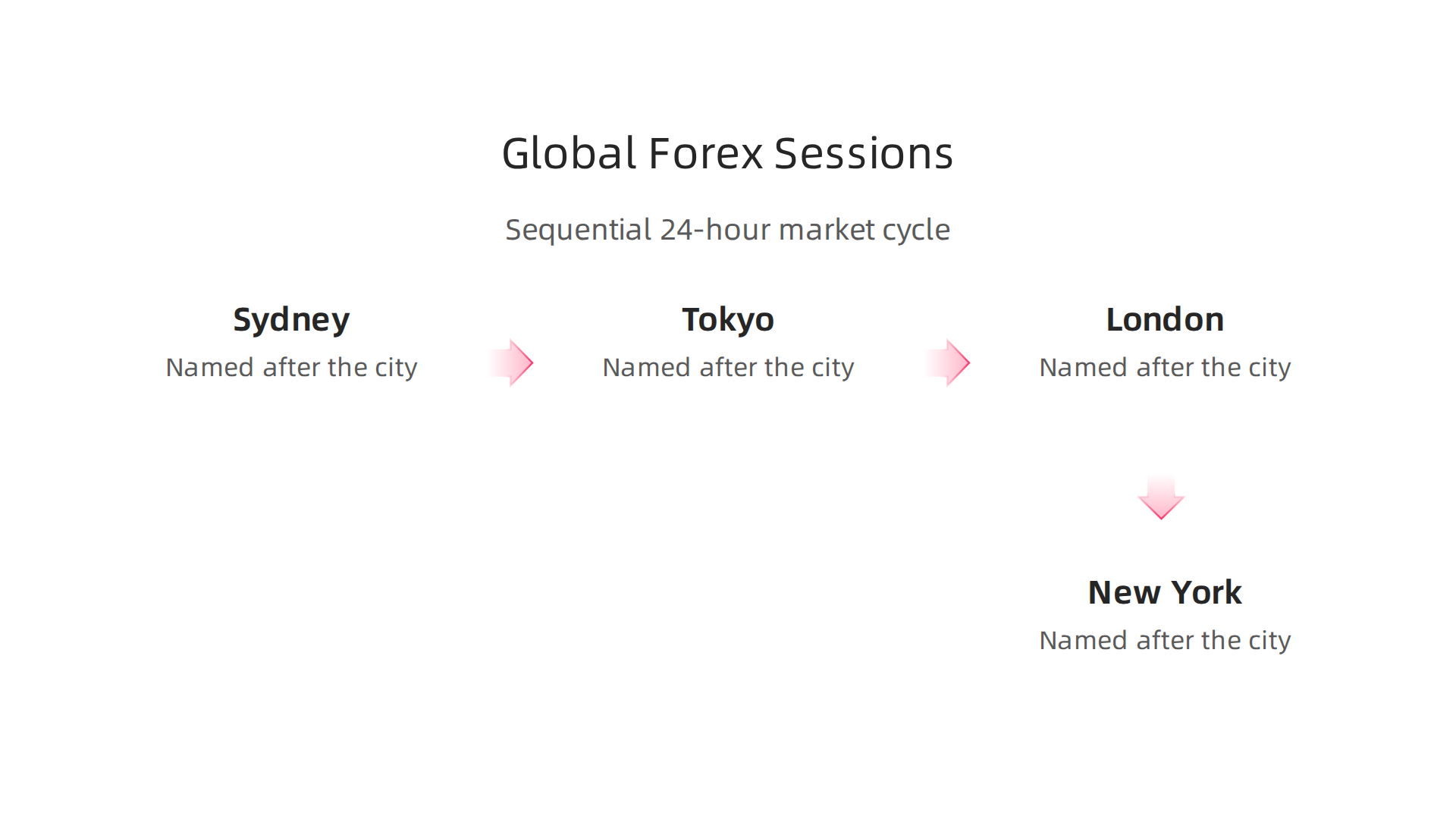
These trading session times are not random. They follow the sun around the globe, creating a 24-hour cycle from Sunday evening to Friday evening. When the Sydney session winds down, Tokyo is getting started. As Asia closes, Europe opens, and then North America joins in. This cycle means the forex market is always open somewhere, but the action moves from one center to the next.
Because the world uses different time zones and observes daylight saving time at different moments, the exact forex session times can shift slightly during the year. For example, in 2026, many brokers adjusted their server times from GMT+2 to GMT+3 in March, as noted in their daylight saving time updates. This is why it is always smart to check your broker’s official schedule.
You do not have to memorize all the clock changes yourself. Tools like the live forex market hours tool from ICT Trading can automatically show you which session is active in your local time.
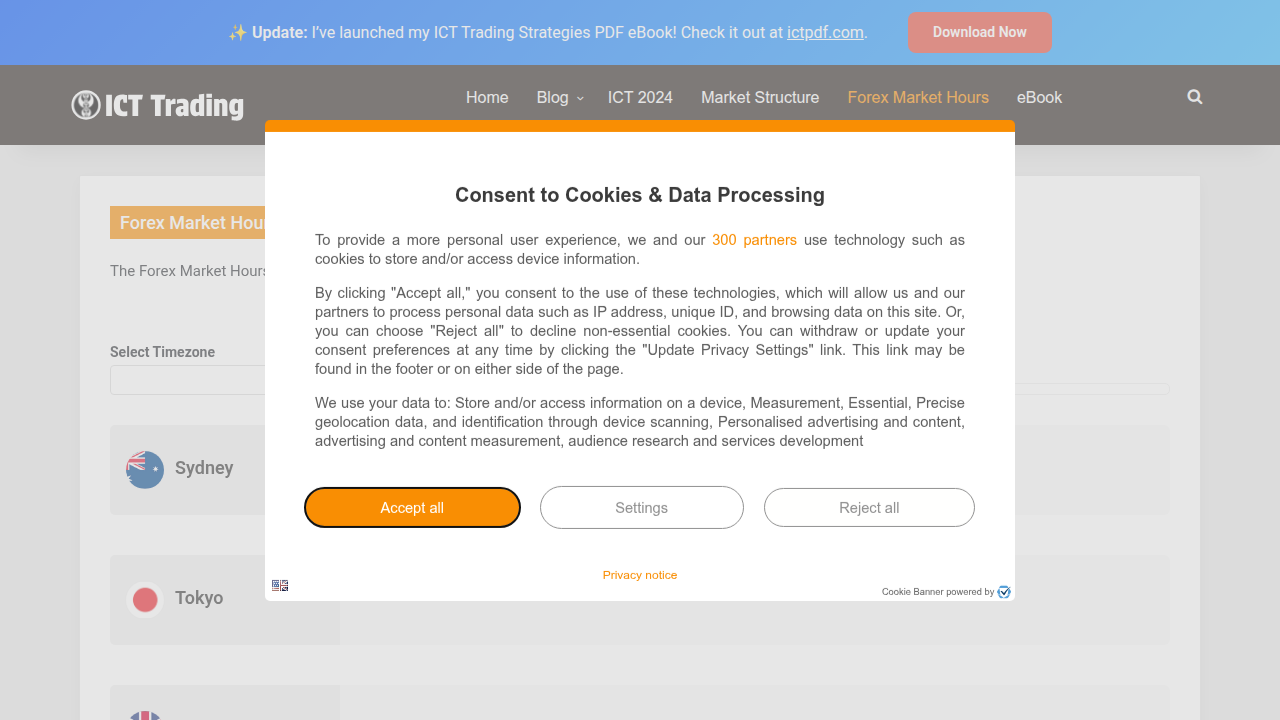
This takes the guesswork out of planning your forex trading day.
Understanding these sessions is your key to finding the market’s rhythm. It helps you trade when there are more opportunities and avoid the quiet, slow periods.

Your Next Step: For more simple guides that make trading concepts easy to grasp, sign up for the free Clicks and Trades newsletter. You will get straightforward tips and guidance delivered right to your inbox.
The Four Major Forex Sessions: Standard Times
Now, let us break down the standard forex session times for each of the four major hubs. Think of these as the core business hours when the banks and big institutions in each region are most active. This is when you will see the most trading volume and price movement for currencies tied to those economies.
Here is a simple table of the typical trading session times in Greenwich Mean Time (GMT), which is a common reference point for global markets.
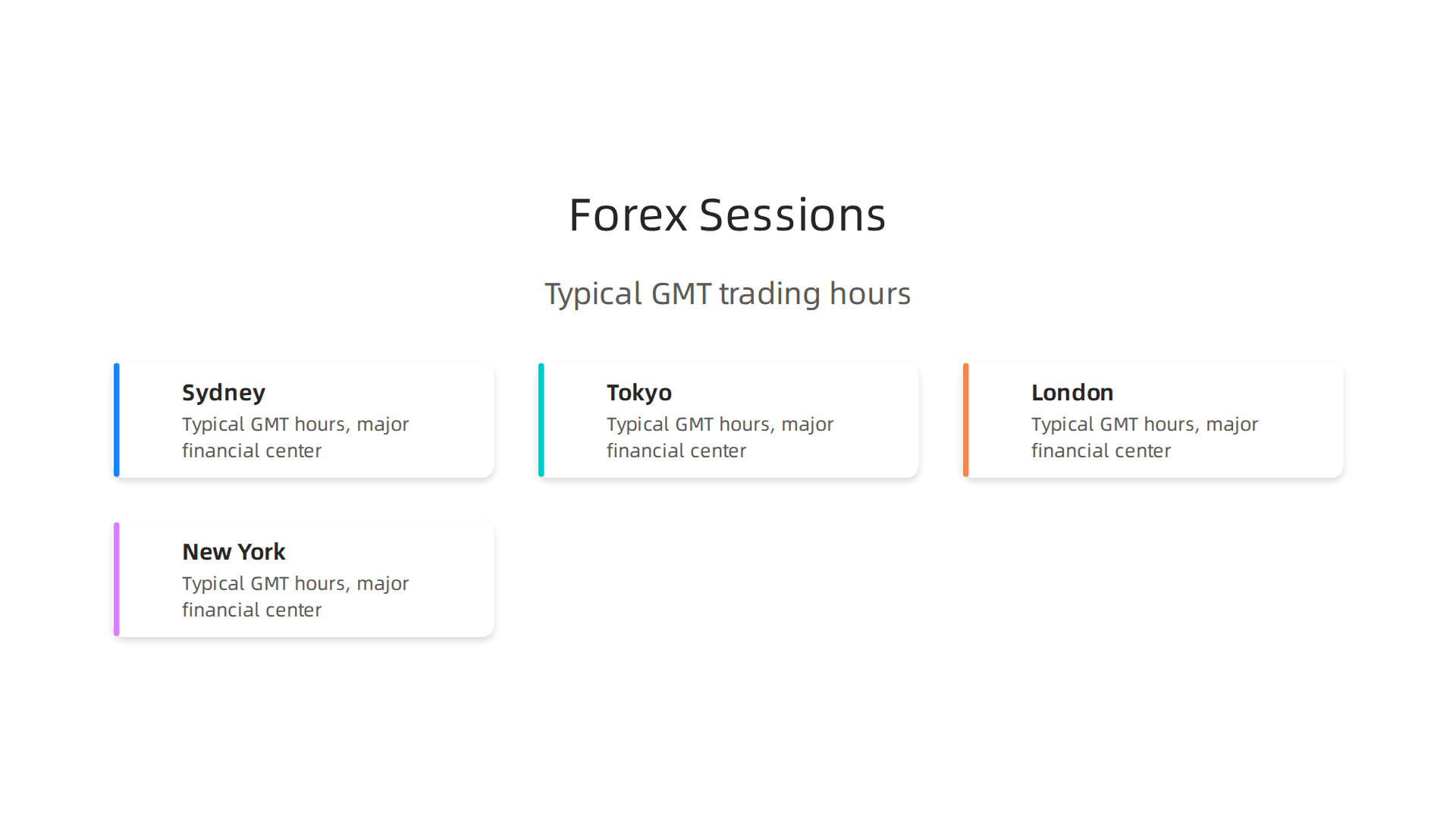
| Trading Session | Typical GMT Hours (Standard) | Major Financial Center |
|---|---|---|
| Sydney Session | 10:00 PM – 7:00 AM | Australia, New Zealand |
| Tokyo Session | 12:00 AM – 9:00 AM | Japan, Singapore, Hong Kong |
| London Session | 8:00 AM – 5:00 PM | United Kingdom, Europe |
| New York Session | 1:00 PM – 10:00 PM | United States, Canada |
A Closer Look at Each Session
Sydney Session
The Sydney session kicks off the new 24-hour trading day. It starts at 10:00 PM GMT. While it is often the quietest session, it sets the tone for the Asian trading day. Pairs like AUD/USD and NZD/USD see more action here. A good resource to learn more about these market rhythms is this 2026 guide to forex market hours.
Tokyo Session
Also called the Asian session, it opens at midnight GMT. This session brings more liquidity as major Japanese banks and other Asian financial centers get to work. It often overlaps with the tail end of Sydney’s hours.
London Session
This is the heavyweight. Starting at 8:00 AM GMT, the London session is the most active period of the entire day. It has the highest trading volume, which means tighter spreads and strong trends. Most major currency pairs, especially those involving the Euro (EUR) and British Pound (GBP), come to life here.
New York Session
The action crosses the Atlantic as the New York session opens at 1:00 PM GMT. This session drives the USD pairs and creates huge volatility when it overlaps with London for a few hours (from 1:00 PM to 5:00 PM GMT). This overlap is often the best time to trade.
The Daylight Saving Time Twist
Here is a crucial point. The times above are "standard," but they shift twice a year because of daylight saving time (DST) in places like the US, UK, and Australia. For example, in March 2026, many broker servers adjusted their official time from GMT+2 to GMT+3, as noted in industry daylight saving time updates. This means the forex session times you see on your trading platform might jump forward or back by an hour.
Do not worry about memorizing these changes. The smartest move is to use a tool that does the work for you. Tools like the live forex market hours tool from ICT Trading show you the active session in your local time instantly. This is much easier than trying to convert GMT in your head while also watching the charts!
Keeping these standard hours in mind gives you a reliable map. For more guides that make complex topics simple, from understanding market hours to other essential concepts, check out our article on why Google Scholar is your quiet room for Bitcoin facts.
Ready to trade with confidence? Get clear, step-by-step guidance delivered to your inbox. Sign up for the free Clicks and Trades newsletter today.
Time Zones and Daylight Saving Adjustments
So you have the standard GMT map of forex session times. Now comes the real world twist. Your clock is not set to GMT. You live in your own local time zone, and so do the financial markets in each country. This is where things can get tricky, but only if you let them.
First, think about your own location. If you are in New York, the London session opening at 8:00 AM GMT actually starts at 3:00 AM your local time during standard periods. A trader in Tokyo sees that same open at 5:00 PM their time. The trading session times are fixed globally, but your local viewing window slides around the clock.
This is where daylight saving time (DST) throws a major curveball. Twice a year, countries like the United States, the United Kingdom, and Australia shift their clocks forward or back by one hour. The forex market does not stop. Instead, the official server times that brokers use change to reflect this.
In March 2026, for example, many trading platforms shifted their server time from GMT+2 to GMT+3 to account for the European change, as noted in a daylight saving time update from FXGlobe. Just a week later, the US made its own shift. This creates a brief period where the time difference between the US and Europe changes, which can affect the exact overlap of the New York and London sessions. You can see how brokers like PU Prime announce these trading hour schedule changes to keep traders informed.

The goal is not to memorize these dates. The goal is to avoid confusion. Manually converting GMT to your time, and then remembering if DST is in effect, is a recipe for mistakes. A missed hour can mean missing a key market move.
Here is the simple solution: use a tool that does it for you. A live tool like the Forex Market Hours tool from ICT Trading automatically detects your local time zone and shows you which sessions are open right now. It handles all the daylight saving adjustments globally, so you do not have to. This is the easiest way to keep your forex trading schedule accurate without any mental math.
Staying on top of these details is part of building a solid trading foundation. For more guides that break down other complex topics into simple steps, explore our article on why Google Scholar is your quiet room for Bitcoin facts.
Want to trade without the time zone headache? Let us handle the updates for you. For clear, step-by-step guidance on navigating the markets, sign up for the free Clicks and Trades newsletter.
Session Overlaps and Volatility Patterns
Think of the forex market like a busy global airport. For parts of the day, only one terminal is open—activity is slow and predictable. But when two major terminals open at the same time, the place erupts with noise, movement, and opportunity.
That’s exactly what happens during forex session times overlaps.
These are the windows when two major trading hubs are open simultaneously. Liquidity doubles. Order flow surges. This is when the market truly wakes up and moves, creating the prime conditions for potential profit.
The Major Overlap Windows
Not all overlaps are created equal. Some are much more powerful than others. Here are the key periods to watch.
The London-New York Overlap (12:00 – 16:00 GMT)
This is the superstar of the trading day. For four hours, the financial capitals of Europe and the Americas are both in full swing. This period is famously volatile and liquid.
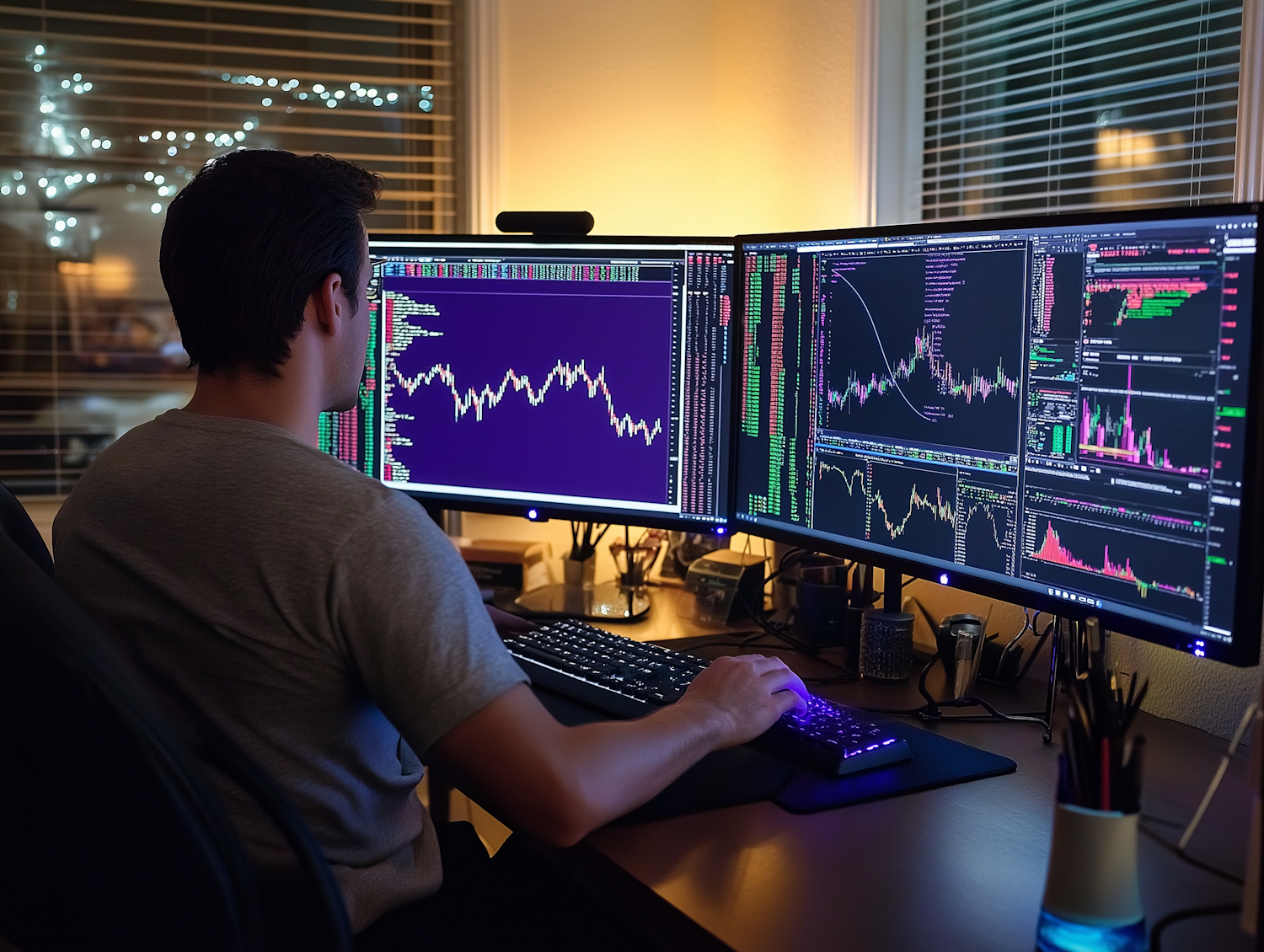
Why is it so significant? The London session alone accounts for about 35% of all global forex volume. When New York joins in, that figure skyrockets. Some analysis suggests that around 70% of the entire day’s trading volume can occur during this crucial window. Price doesn’t move on its own. It moves when the world’s biggest banks and funds are active, and they are most active right here.
This overlap is the best time for strategies that need momentum. Think breakout trades or trend following. Major U.S. economic data is often released during this window, adding another layer of potential volatility. As noted in a 2026 guide, high-volatility overlaps like London-New York are ideal for these kinds of dynamic strategies.
The Sydney-Tokyo Overlap (23:00 – 01:00 GMT)
This is the Asian session overlap. While it involves significant financial centers, its character is different. The volatility is generally lower and more focused on specific Asian currency pairs like AUD/JPY or NZD/JPY. It’s more of a steady grind than a explosive rally. This can be a good time for range-trading strategies, where you look for price to bounce between clear support and resistance levels.
Trading with the Overlaps, Not Against Them
Knowing when these overlaps happen is one thing. Using them wisely is another. Here’s the simple approach.
First, align your strategy with the market’s personality. Trying to scalp for tiny profits during the quiet Asian session is often frustrating. Similarly, using a slow, range-trading strategy in the middle of the London-New York storm can be equally tough. Match your plan to the market’s energy.
Second, focus is everything. One of the most common mistakes traders make is ignoring session overlaps or trying to trade all day without a plan. The professional approach is to focus your attention and energy on these high-probability windows. The rest of the day can be for planning, analysis, and research. For instance, using a tool like Google Scholar to find solid research is a perfect quiet-time activity.
Finally, use a reliable session tracker. You don’t need to memorize times. Use a live tool that shows you when sessions open and close in your local time. This helps you visually see when overlaps begin and end, so you can be prepared and focused.
Understanding these patterns turns random market noise into a structured schedule. You stop chasing every little move and start trading when the odds are more in your favor.
Want to trade with more confidence and less guesswork? Getting clear, step-by-step guidance can make all the difference. For straightforward tips and market insights delivered to your inbox, consider joining the free Clicks and Trades newsletter. It’s a helpful resource for building a smarter approach.
Trading Strategies for Different Sessions
Now you know when the market moves. The next step is knowing what to do during those times. Matching your strategy to the market’s current personality is a game changer. It turns frustration into focus. Let’s look at the best approaches for quiet and busy forex session times.
Strategies for Low-Volatility Sessions
These are the quieter periods, like the middle of the Asian session or the late New York session. The market is slow. Price often moves sideways in a tight range. The goal here is patience and precision, not chasing big waves.
- Range Trading: This is the classic strategy for quiet markets. You identify clear levels of support (where price bounces up) and resistance (where price falls down). Your plan is to buy near support and sell near resistance. The key is waiting for the price to reach these levels and show signs of bouncing, not guessing in the middle.
- Scalping with Caution: While fast-paced scalping is often associated with high volatility, some forms can work in quieter markets. The focus is on capturing very small, frequent gains. However, spreads (the cost of the trade) can eat into profits more easily when price isn’t moving much. If you scalp here, you need a very strict exit plan. Some 2026 guides on precise strategies, like using specific indicator combinations, can be useful for this approach.
The quiet hours are also perfect for your homework. You can plan your next trades, analyze charts without pressure, or do deeper research. For example, using trusted sources for research during these calm periods is a smart habit.
Strategies for High-Volatility Sessions
This is when the market is awake and moving, especially during the London-New York overlap. Liquidity is high. Trends can develop quickly. Your strategies need to be dynamic.
- Breakout Trading: During high volume, price often breaks through key support or resistance levels. A breakout strategy aims to capture this powerful move as it starts. You wait for the price to convincingly push through a level with increasing volume, then enter in the direction of the break.
- Trend Following: When a strong directional move gets going in a major session, the best action is often to go with the flow. Trend followers use indicators to identify the momentum’s direction and strength, then look for opportunities to join the trend on small pullbacks.
- News Trading: This is directly tied to the economic calendar. Major news releases (like U.S. jobs data or central bank decisions) cause instant volatility. Traders position themselves before or immediately after the news, anticipating a sharp move. This is high-risk and requires a clear understanding of the event and a rock-solid risk management plan.
A modern 2026 trading resource on best Forex trading strategies confirms that aligning your method with market volatility is key to consistency. Trying to force a quiet range trade in a storm usually leads to getting stopped out. Similarly, chasing breakouts in a sleepy market often results in fakeouts.
Incorporating Economic Calendar Events
Your forex trading plan isn’t complete without the calendar. Economic events are the scheduled catalysts that create the volatility we trade.
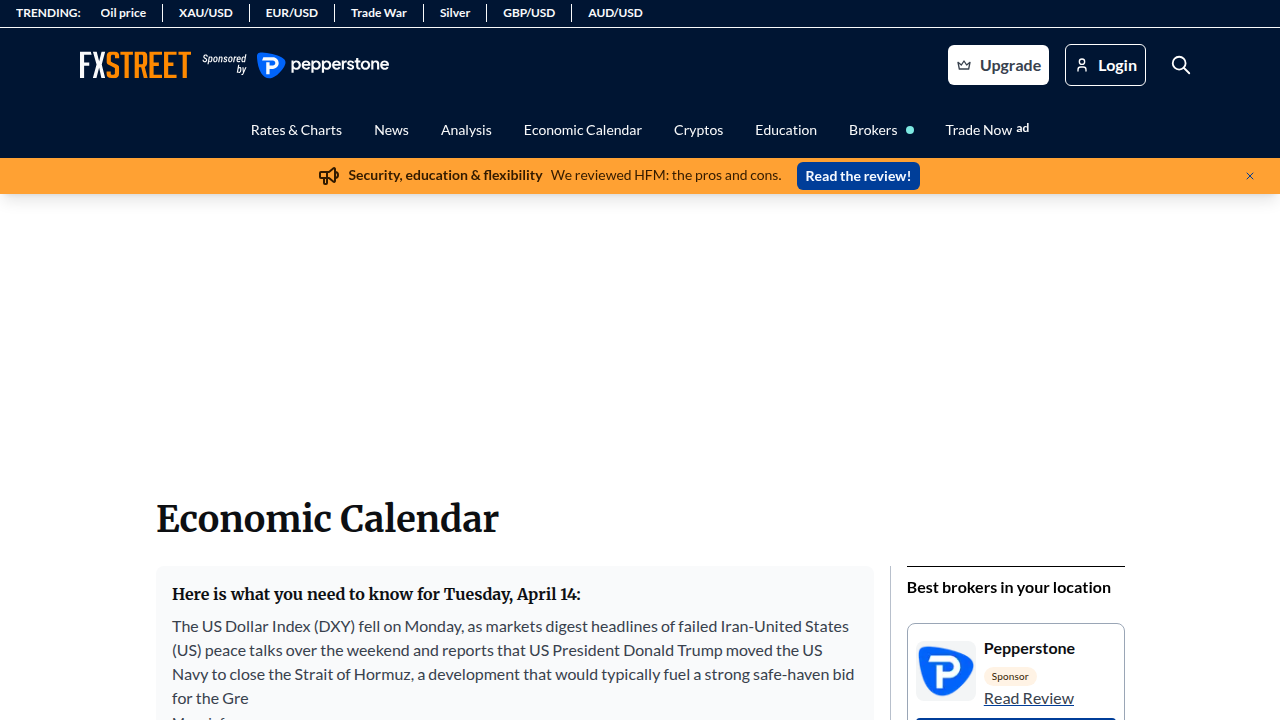
- Know the Schedule: Always check a reliable economic calendar at the start of your week and day. Sites like FXStreet provide real-time calendars showing the time, currency affected, and importance of each event.
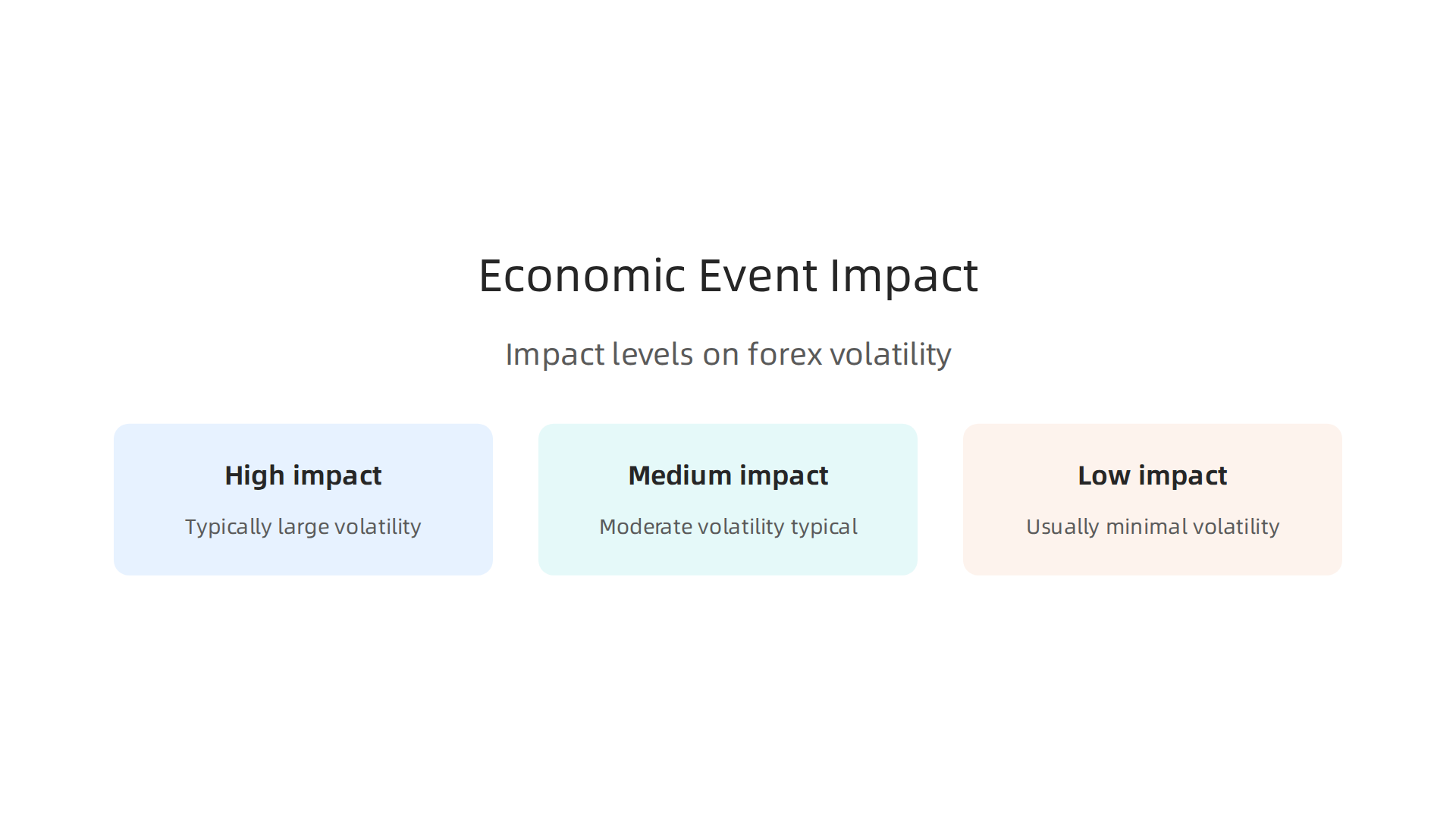
- Understand the Impact: Not all events are equal. A central bank interest rate decision will move markets far more than a minor economic survey. Focus on high-impact events for the currencies you are trading.
- Plan Around Them: You have choices. You can avoid trading just before a major event to avoid unpredictable spikes. You can close existing positions to lock in profits. Or, if it’s part of your strategy, you can prepare to trade the volatility of the news release itself.
Here’s a simple way to think about it:
| Event Type | Example | Typical Market Impact |
|---|---|---|
| High Impact | Central Bank Rate Decision, Non-Farm Payrolls (NFP) | Very High Volatility, Strong Directional Moves |
| Medium Impact | Inflation Data (CPI), Retail Sales | Increased Volatility, Possible Trends |
| Low Impact | Minor Surveys, Speeches | Low to Negligible Volatility |
By combining your knowledge of trading session times with the economic calendar, you move from reacting to the market to anticipating it.
You trade the schedule, not just the screen.
Mastering these patterns takes practice, but you don’t have to figure it all out alone. For clear, step-by-step insights that help you build confidence, consider joining the free Clicks and Trades newsletter. It’s a straightforward way to get smarter trading guidance delivered directly to you.
Ready to put these session-based strategies into action? Start by Signing Up for free insights and build your trading plan with more clarity.
Tools to Monitor Forex Sessions
Knowing the right forex session times is one thing. But how do you know which session is active right now? You need the right tools. Good tools take the guesswork out of the equation. They help you see the market’s rhythm at a glance. This is how you trade with intention instead of just reacting.
Here are three essential types of tools every trader should use in 2026.
Forex Session Clocks and Timers
This is your basic dashboard. A good session clock shows you instantly which major market is open. It highlights the current overlapping period. And it counts down to the next session open or close.
Why use one? It saves you from constantly calculating time zones. It keeps you disciplined. If your strategy works best in the London session, the clock tells you when to get ready and when to step away.
Some platforms, like those reviewed by Mondfx, build these clocks directly into live charts. This gives you timing and price action in one place.
Economic Calendar Tools
Your trading plan is incomplete without an economic calendar. We talked about planning around news. A calendar tool makes that easy.
A great calendar shows you:
- The exact time of an event (in your local time).
- The currency it affects.
- The forecasted number and the previous result.
- A clear rating of its potential impact (high, medium, low).
You check this at the start of your day. It tells you when the market might suddenly wake up. This way, you are never caught off guard by a volatility spike. You can choose to avoid trading during that time or prepare to trade the news if that’s your plan.
Real-Time Volatility Indicators
Sometimes, you need to see the market’s mood, not just know the time. Volatility indicators measure how fast and how much price is moving right now.
These are often built into your trading platform. Common ones include the Average True Range (ATR) or Bollinger Bands. When these indicators show wide bands or high readings, the market is active. When they contract, things are quiet.
Matching your strategy to this real-time data is key. As noted in a 2026 guide on Forex trading strategies, trying a breakout trade when volatility is low often leads to false signals. These indicators help you confirm what the session clock is telling you.
Putting It All Together
Imagine your trading setup. You have a session clock in the corner of your screen. You know the London-New York overlap starts in 30 minutes. Your economic calendar shows no high-impact news for the next two hours. Your volatility indicator is starting to rise from its Asian session lows.
This isn’t just data. It’s a clear signal. The conditions are aligning for your high-volatility trend-following strategy. You can prepare with confidence.
Using these tools turns abstract trading session times into a concrete, tradable edge. They help you wait for your moment and recognize it when it arrives.
The best traders never stop learning. For clear, step-by-step guidance that helps you build this kind of disciplined approach, join the free Clicks and Trades newsletter. It delivers smart, actionable trading insights directly to you.
Ready to start monitoring the market like a pro? Sign Up for free today and get the clarity you need to build a smarter trading plan.
Common Pitfalls in Session-Based Trading
You have the clocks. You have the calendars. You know the key forex session times. But knowledge alone doesn’t stop mistakes. In fact, knowing the schedule can sometimes lead to overconfidence. The biggest errors in session-based trading aren’t about forgetting the time. They are about misusing it.
Let’s look at three common traps traders fall into, and how you can avoid them in 2026.
Ignoring Time Zone Differences (Even with Tools)
This sounds basic, but it’s a major pitfall. You might know that London opens at 8:00 AM GMT. But if you’re in New York and forget the 5-hour difference, you’ll be logging in at 3:00 AM your time. Ouch.
The problem isn’t a lack of tools. It’s a lack of personalization. A session clock shows you GMT, but your life runs on local time. The mistake is not translating global market hours into your own daily routine.
The fix: Use a session clock that displays multiple time zones, including your local time. Set alerts on your phone for when your preferred session begins. Make the schedule work for you, not the other way around.
Trading During Illiquid Sessions
This is where patience disappears. The Asian session is quiet for most major pairs like EUR/USD. The price moves slowly. Feeling bored or eager, a trader might start forcing trades, taking low-probability setups just to be "in the market."
This is a classic form of overtrading. As experts note, trading frequently without a clear strategy just to recover losses or beat boredom is a common and costly error. The low volatility leads to small gains, tight stops getting hit, and frustration.
The fix: Respect the market’s rhythm. If your strategy needs volatility, walk away during quiet trading session times. Use that time for analysis, planning, or education instead. As highlighted in a guide on common errors, overtrading is often a sign of trading without a plan.
Overlooking Economic News Releases
You have the perfect setup. The London-New York overlap is starting. Your chart pattern looks textbook. You enter a trade… and then a high-impact news event erupts, blowing your stop loss away in seconds.
This pitfall isn’t about not having a calendar. It’s about not checking it religiously. Every trading day must start with a scan of the economic calendar. Ignoring this is like ignoring weather reports before sailing.
The fix: Before any trading session, open your economic calendar. Filter for "High Impact" events on the currencies you trade. If a major announcement is due within the next hour, consider waiting it out. Trading without this awareness is a fundamental mistake, akin to trading without any plan at all. For building a solid, fact-based plan, learning how to find reliable information is key, much like using Google Scholar for clear research.
The Common Thread: Discipline
All these pitfalls share a root cause: a lapse in trading discipline. Tools give you information, but only you can provide the self-control to use it correctly.
The best way to build that discipline is through consistent, clear education. You can avoid these common errors by following a structured learning path. For ongoing, step-by-step guidance that helps you trade with more confidence and less guesswork, join the free Clicks and Trades newsletter. It delivers smart insights directly to your inbox, helping you navigate forex session times and all the challenges that come with them.
Ready to trade the sessions smarter and sidestep these common mistakes? Sign Up for free today and build the disciplined approach you need.
Expert Tips and Advanced Strategies
Now that you know the common mistakes, let’s focus on power. Knowing the forex session times is one thing. Using them to your advantage is where the real opportunity lies. Here are advanced strategies to help you trade smarter in 2026.
Master the High-Volatility Overlaps
This is the golden rule. The market moves when the most traders are active. The best opportunities come when two major financial centers are open at the same time.
- The London-New York Overlap (1 PM to 4 PM GMT): This is the most important window. As research notes, the London session and its overlap with New York have the highest volatility. Why? Up to 70% of the day’s trading volume happens here. This flood of activity creates strong, sustainable trends.
- The Strategy: Use this time for momentum or breakout trading. Look for currency pairs to push through key support or resistance levels. The high volume gives these moves more credibility.
The quiet Asian session is for planning. But the London-New York overlap is for action. As experts explain, high-volatility overlaps such as London–New York may suit breakout or trend-following strategies.
Match Your Currency Pairs to Their "Home" Session
Not all currency pairs are created equal during every session. You will find more movement and better opportunities if you trade the right pair at the right time. Think of it like watching a sports team play at their home stadium.
| Currency Pair | Most Active Session(s) | Why It Works |
|---|---|---|
| EUR/USD, GBP/USD | London, London-NY Overlap | The Euro and Pound are European currencies. They react to data from their region when London is open. |
| USD/JPY, AUD/USD | Asian, London-NY Overlap | The Yen and Aussie Dollar are tied to the Asia-Pacific schedule. They can be active in Asia and then get a second wave during the global overlap. |
| USD/CAD | New York | The Canadian dollar is heavily influenced by US market sentiment and oil prices, making the New York session key. |
By focusing your efforts this way, you align with the natural liquidity flows. The pair’s price is driven by the economic news and bank activity of its home region. For more on choosing the right instruments, you can explore guides on the top forex pairs for 2026.
Sharpen Your Risk Management for Peak Times
Higher volatility means bigger potential profits. It also means bigger potential losses. Your standard risk rules need to be extra tight during busy trading session times.
- Wider Stops (But Same Risk %): During the London-New York overlap, normal market "noise" is louder. A price swing that would be unusual at 3 AM GMT is common at 2 PM GMT. You might need to set your stop-loss order a bit farther away from your entry to avoid getting stopped out by a routine fluctuation. The key is to adjust your position size so that this wider stop still risks the same percentage of your account (e.g., 1%).
- Beware of "Slippage": In fast-moving markets, your order might get filled at a slightly different price than you expected. This is slippage. It usually happens during major news releases. The best practice is to either avoid trading in the minutes before high-impact news or use guaranteed stop-loss orders if your broker offers them.
- The Economic Calendar is Your Co-Pilot: This is non-negotiable. Before the London open, check the calendar. Filter for "High Impact" events. If a major US jobs report or a European Central Bank announcement is due, you must have a plan. Will you wait until after the news? Will you close your positions before it? Trading without this is a critical error. You can use a reliable, real-time tool like the FXStreet Economic Calendar to stay informed.
Bringing It All Together
Advanced trading is about precision. It’s not just trading during the London session. It’s trading EUR/USD with a tailored strategy and fortified risk management during the peak two hours of the London-New York overlap.
These strategies turn your knowledge of forex session times into a structured edge. To keep refining this edge with clear, step-by-step guidance delivered to your inbox, join the free Clicks and Trades newsletter. It’s designed to help you build confidence and make smarter decisions, one session at a time.
Ready to apply these expert strategies? Sign Up for free today and take the next step in your trading journey.
Summary
This article explains forex trading sessions—the global